
History of the Uswathunnabi
International Academic Conference
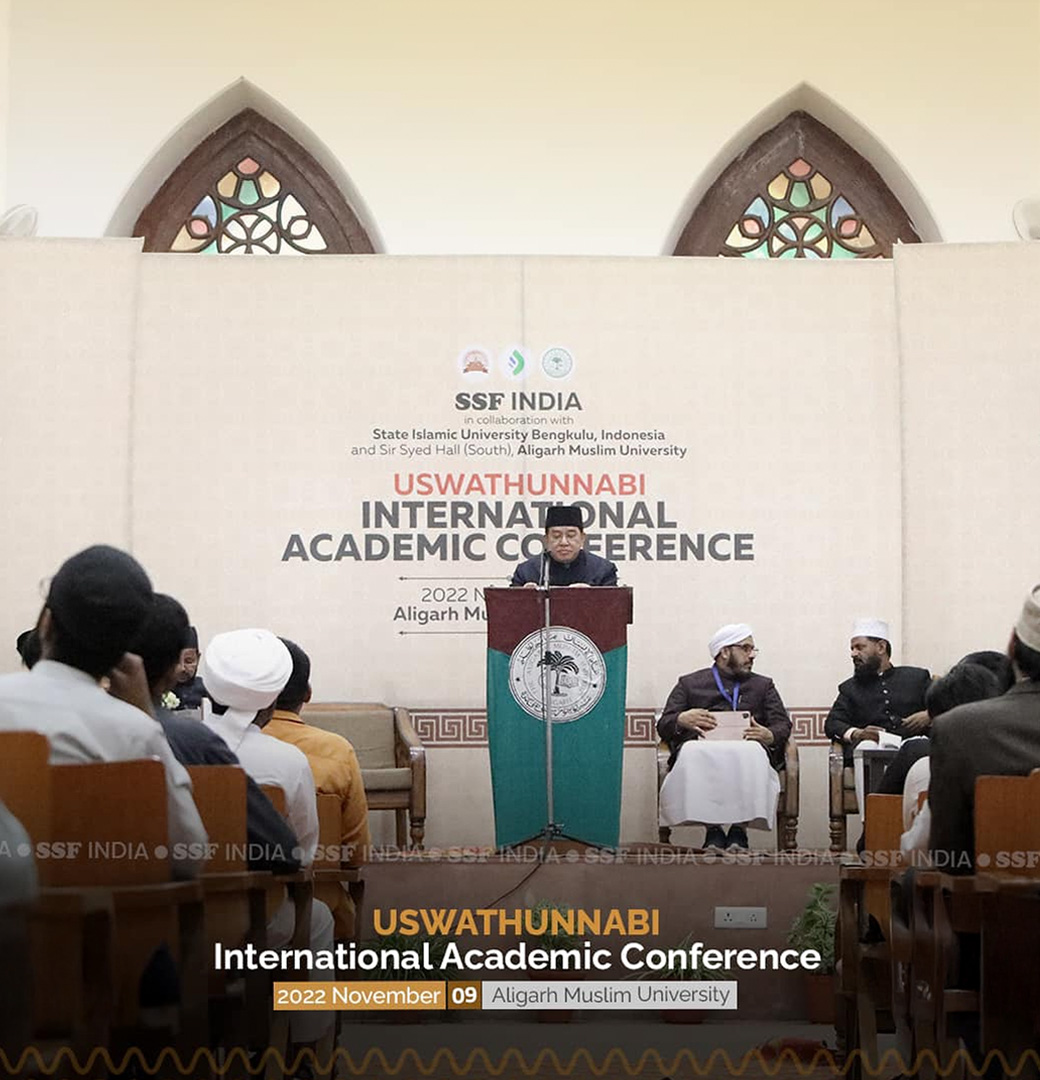
The Uswathunnabi International Academic Conference was established in 2022 with the vision of creating a global academic platform dedicated to the life, teachings, and universal message of Prophet Muhammad صلى الله عليه وسلم. The first edition was organized by SSF India, in collaboration with Fatmawati Sukarno State Islamic University, Bengkulu, Indonesia, and Sir Syed Hall (South), Aligarh Muslim University. This inaugural collaboration marked the beginning of an international scholarly movement that sought to bring Seerah studies into mainstream academic discourse.
The conference was founded to promote rigorous research and critical engagement with the Prophetic legacy. It aims to provide a professional academic space where scholars, researchers, and students can present original work, exchange ideas, and explore the relevance of the Prophet’s صلى الله عليه وسلم model of morality, leadership, social justice, and ethical governance in addressing contemporary global challenges. By encouraging young researchers and fostering high-quality scholarly dialogue, the conference aspires to preserve and strengthen the intellectual heritage connected to the Seerah.
Over time, the Uswathunnabi Conference has evolved in both scope and impact. Its academic purpose has always been clear: to advance interdisciplinary research on the life and legacy of Prophet Muhammad صلى الله عليه وسلم, and to support scholars in studying the Prophetic model through historical, linguistic, philosophical, sociological, and contemporary analytical frameworks. Each edition has successfully broadened the conference’s academic reach, creating opportunities for deeper engagement and cross-cultural intellectual exchange.
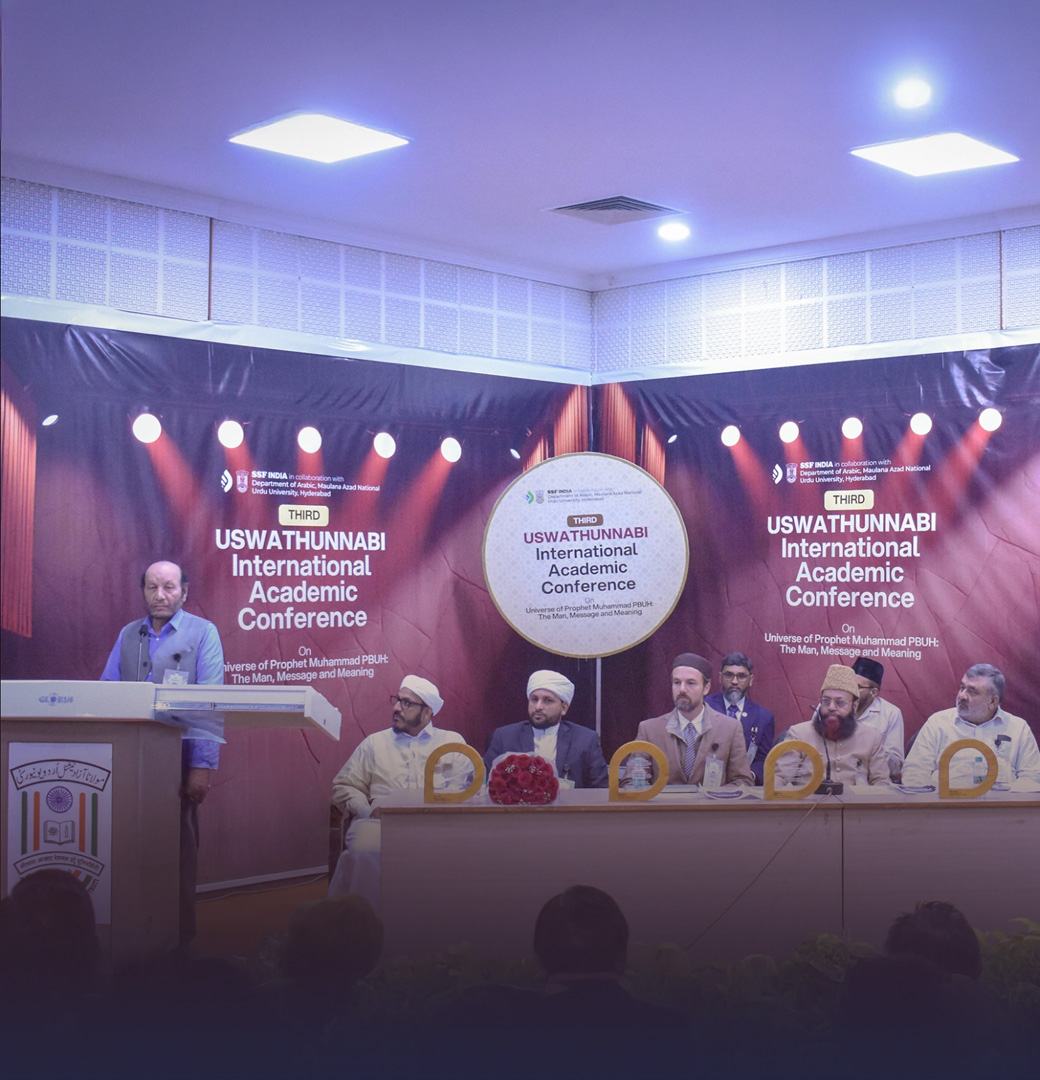
In just four editions, the conference has achieved remarkable growth from a modest academic gathering to a recognized international platform. A major milestone in this journey has been the collaboration with the Department of Arabic, Maulana Azad National Urdu University (MANUU), Hyderabad, which significantly strengthened the academic structure and credibility of the event. With every year, participation has increased, research quality has improved, themes have expanded, and institutional partnerships have multiplied.
Today, the Uswathunnabi International Academic Conference stands as a vibrant and influential initiative that continues to attract scholars and students from across India and abroad. Its steady growth reflects its commitment to nurturing a global scholarly community dedicated to the study, understanding, and dissemination of the Prophetic legacy through high-quality academic engagement.
Impact Over the Years
Across its four editions, the Uswathunnabi International Academic Conference has evolved into a significant academic platform with notable impact in Seerah studies and Islamic scholarship. Over the years, the conference has received more than 1,600 abstracts and hosted over 1,600 participants, reflecting its growing academic credibility and wide outreach. Nearly 200 research papers have been reviewed, presented, and accepted, contributing to deeper scholarly engagement with the life and legacy of Prophet Muhammad صلى الله عليه وسلم. The conference has built strong academic collaborations with Fatmawati Sukarno State Islamic University, Bengkulu, Indonesia, Sir Syed Hall (South), Aligarh Muslim University, and the Department of Arabic, Maulana Azad National Urdu University (MANUU), Hyderabad, enabling rich inter-institutional cooperation and exchange. A major milestone has been the publication of selected papers in a conference book, officially released during the 4th Uswathunnabi Conference, marking an important step in building a documented scholarly archive. The conference has significantly supported students and young researchers by offering them opportunities to present papers, improve academic writing skills, and gain confidence through expert feedback. Both academically and organizationally, the conference has demonstrated steady growth, strengthening its review processes, expanding participation, and positioning itself as a respected platform dedicated to advancing Seerah-focused academic research.

